

Some artists paint with light. Some with words. Peter Scartabello works in something far stranger — those shadow-frequencies where dread, beauty, and the unnameable all hum at once.
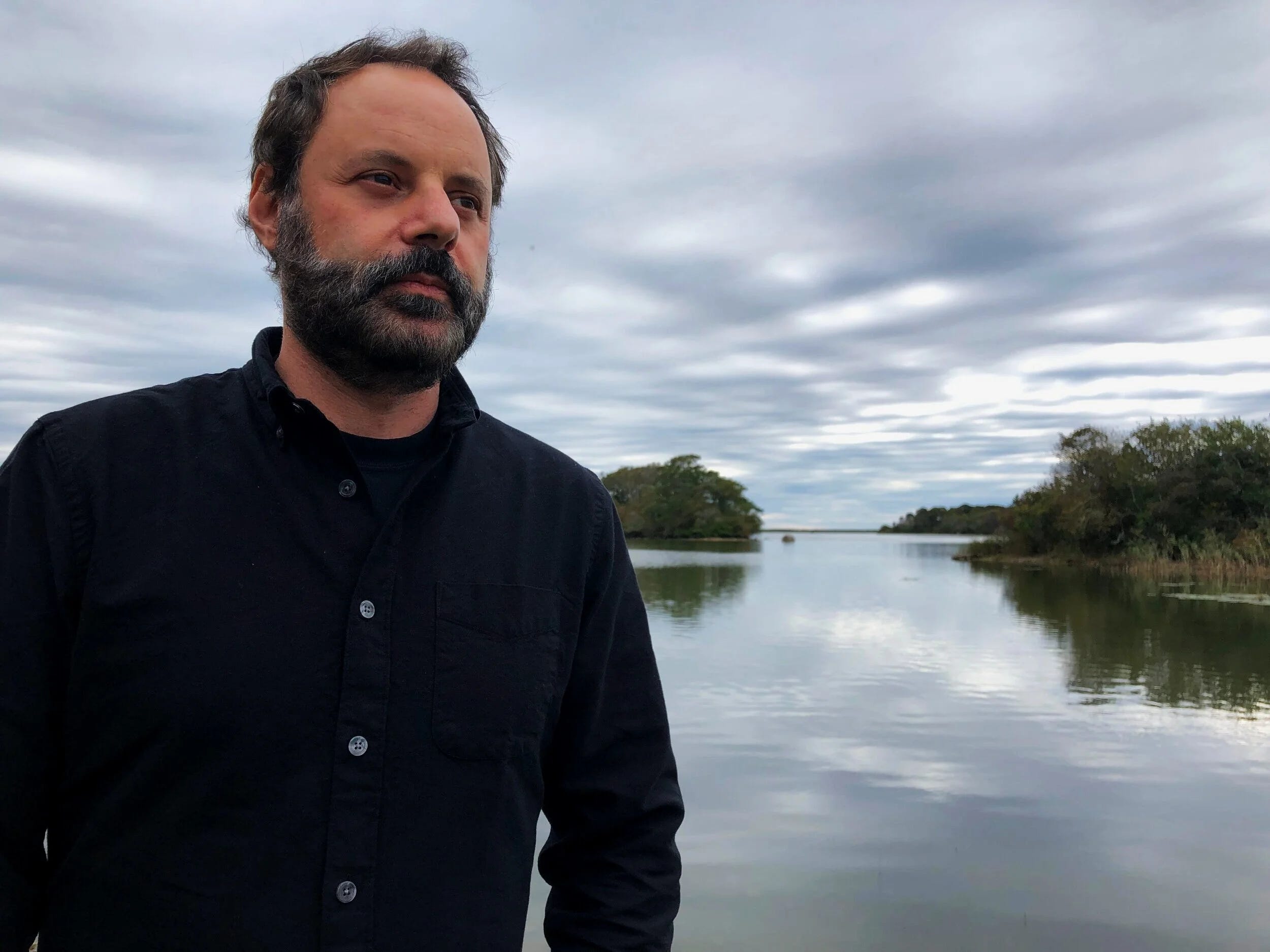
If you’ve watched First Word On Horror or The Spine of Night, you’ve already been pulled into his sonic universe: warped strings that feel like whispered warnings, shimmering tones that seem to bend the air, and textures you can’t quite place because they were never meant to be familiar. Peter is the force behind the series’ musical identity, crafting bespoke soundworlds for each author — built from field recordings, avant-garde instrumental experiments, and his own instinct for the uncanny.
In this interview, Peter talks about the alchemy behind that work: how he reads each story before writing a single note, why horror demands new sounds rather than old tropes, the joy of collaborating with Philip Gelatt, and the surprising intimacy of working with a single bass or cello. He shares the challenges, the breakthroughs, and the moments where the music stops being composition and begins to become something timeless.
It’s a rare look inside the mind of a composer who doesn’t just underscore horror — he reshapes how we feel it.
Enter the soundworld.
What first inspired you to compose music for First Word On Horror?
The inspiration for this comes from each individual story and author. So before I even began composing I would familiarize myself with the author and read the specific work the segment focused on. From there I would have an idea of what the soundworld should be and I would discuss that with Phil.
How do you translate dread, unease, or the uncanny into sound?
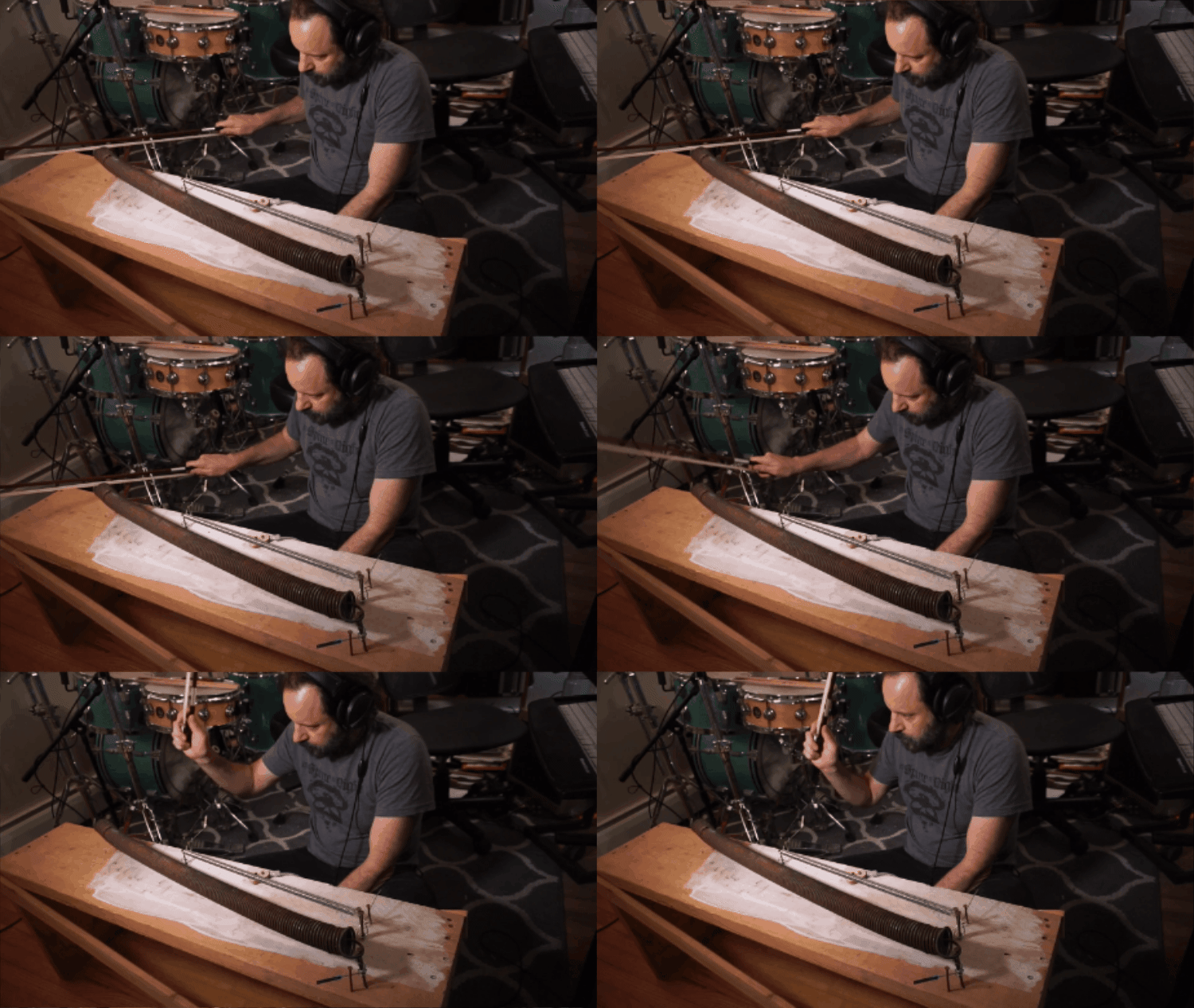
This is a question that I’ve thought about for many years since I’ve started composing music in the horror genre, I’ve discovered that it’s all about making the listener/viewer feel uneasy. I try to use sounds that can’t be identified and I often make my own sounds with field recordings I’ve gathered over the years. On some episodes I used a cellist and bass player, but even then I’m taking their parts and warping them with sound synthesis software I use called Supercollider. Creating masses of sound or strange acoustic / electronic hybrids. Basically I think if someone hears the old horror tropes of string clusters it’s too safe in many ways, because they are already familiar with that sound from the horror soundtrack canon and they know what a violin sounds like. I’m always searching for new sounds, which is what interests me about writing in this style.
Did you build pieces around specific authors or focus more on creating an overarching mood?
The pieces are built around the specific story mostly, but there were times when I was underscoring in a more biographical way. I wanted every author piece to have a different sound world, so each chapter utilizes a different sound palette. That being said I do have a style so that will always give a cohesive feeling across the whole series. I definitely spend the most time finding a specific sound universe when I begin any project. Once I have that I can get into a groove more easily with the actual composing.
How closely did you collaborate with the Etch team, and what was that creative exchange like?
I’ve mostly worked with Philip on this. We have worked together in the past on Spine of Night and it’s always a great pleasure. His vision is so clear, which makes our conversations very easy. We also have very similar tastes, so when he gives me references I immediately know what he’s after. I think the best directors clearly express their vision, but also give you the freedom to do your thing. I’ve worked with many directors where you’ve felt handcuffed by their direction and you end up compromising your voice. It’s a give and take of course, and as a composer you are ultimately serving the director’s vision, but with Phil it always feels like a true collaboration. I also think, because of his writing background he has a strong sense of arc and story and he can clearly articulate that to me when I need direction.
Was there a particular story or interview that pushed you to try something new musically?
I would say I tried some new things in every piece, but there were a few things I did differently on the Liz Hand and Mariana Enriquez stories. For those I hired the acoustic bass player Evan Carley and cellist Aliya Ultan respectively. I liked the idea of limiting myself to just a single soloist for those stories. I think when you put certain limitations on yourself it forces you to get more resourceful and creative. I also love the intimate aspect of a single player. You can get some wonderfully strange sounds out of the bass and cello. Both players are also in the avant garde classical / jazz scene, so they are more than willing to explore the extended techniques I dream up. I had Evan hitting a metal ruler against his bass and I has Aliya bowing the two outer strings of the cello from under the strings (which she begrudgingly did, but was eventually thrilled by haha). What I also love about those pieces is a lot of the work I do as a classical composer spilled over onto those and it didn’t feel forced at all. So in a way those pieces are me in my purest form as a composer. And it’s just great to work with actual players. As media composers we have thousands of sample libraries at our disposal, but there is nothing like getting the raw energy of an actual player to play your work. And working with players like this that understand your vision is very rare and special. So I think everything came together on these two author segments for these reasons.
Horror music often balances beauty and menace — how did you approach that tension?
I think that dialog is critical in all music. Consonance and Dissonance, Tension and Release, those are really at the core of musical experience. So for there to be any effect at all in the art of music you have to understand that relationship. I think what’s exciting about horror is you can go a lot further in the direction of dissonance and tension. Because of this, a moment of beauty will be even more poignant. I tried to bring out a lot of this in the Mariana piece La Casa de Adela. There was a certain fragility in Adela’s character, so the score is very soft and delicate at times.
Which track on the album feels most personal to you, and why?
That’s a hard question because I like different ones for different reasons, and there are many aspects to my work. But if I’m thinking about what feels the most personal, it would be the short piece Minerva from the Laird Barron episode. It just sounds like a familiar place for me to go to musically and has a thread that goes back decades in my earlier work. An almost naïve and innocent quality, something about youth which is what I was going for. The place of making music before I really knew anything about music. If that makes sense.
What was the biggest challenge in composing this score, and how did you overcome it?
As I said before, the biggest challenge is always finding that soundworld where each author’s work lives, at least in my mind. This can often take you to unexpected places. So I would say the difficulty comes in allowing yourself to lose your ego and go there. I think any artist can relate to the idea of getting out of your own way. We try to control all the parameters as artists, but the best work comes when you let your subconscious do its thing and relinquish that control.
Do you see the album as a companion to the series, or as a standalone listening experience?
My hope is that it is both, which is why I kept the order of pieces intact. It’s a long album and I do fear that it’s too much for a lot of attention spans. But we seem to be moving again to a place where people do want to slow down and have a meaningful listening experience.
What do you hope listeners feel when they experience the album?
With any music I write my intention is to take a listener on a journey, as cliche as that sounds. I also think a lot about how we perceive time. I’m reading The Dispossessed by Ursula K. Le Guin and in it the main character, who is a physicist working on theories of time and space, discovers music. He says something like, music is my art, an art made of time. I love that! So if I can cause the listener to lose their sense of time I’m happy. I think that’s what drew me to music in the first place, getting lost in that timeless space. We could all use a bit of that now I think.
If this interview left you wanting more, Peter’s Etch Cast episode delivers: a candid, fascinating look at the mind behind our most unsettling music.
If this kind of work speaks to you, stay with us. Independent filmmaking like this exists because of readers like you. Subscribe below and help Etch keep chasing the stories, sounds, and shadows that don’t fit anywhere else.